
Carbon Footprint and Low-Carbon Consulting
Carbon footprint calculation and low-carbon consulting support profitable and sustainable business operations, construction projects and product manufacturing – providing the data and direction needed to reduce emissions systematically and cost-efficiently.
Organisational carbon footprint management
Low-carbon consulting and carbon footprint management help cut emissions and pursue carbon neutrality in a systematic way. The first step is identifying the largest emission sources through standards-based carbon footprint calculation.
From there, data is produced to support decision-making and the development of a concrete carbon roadmap, focusing on the most cost-efficient emission reduction measures.
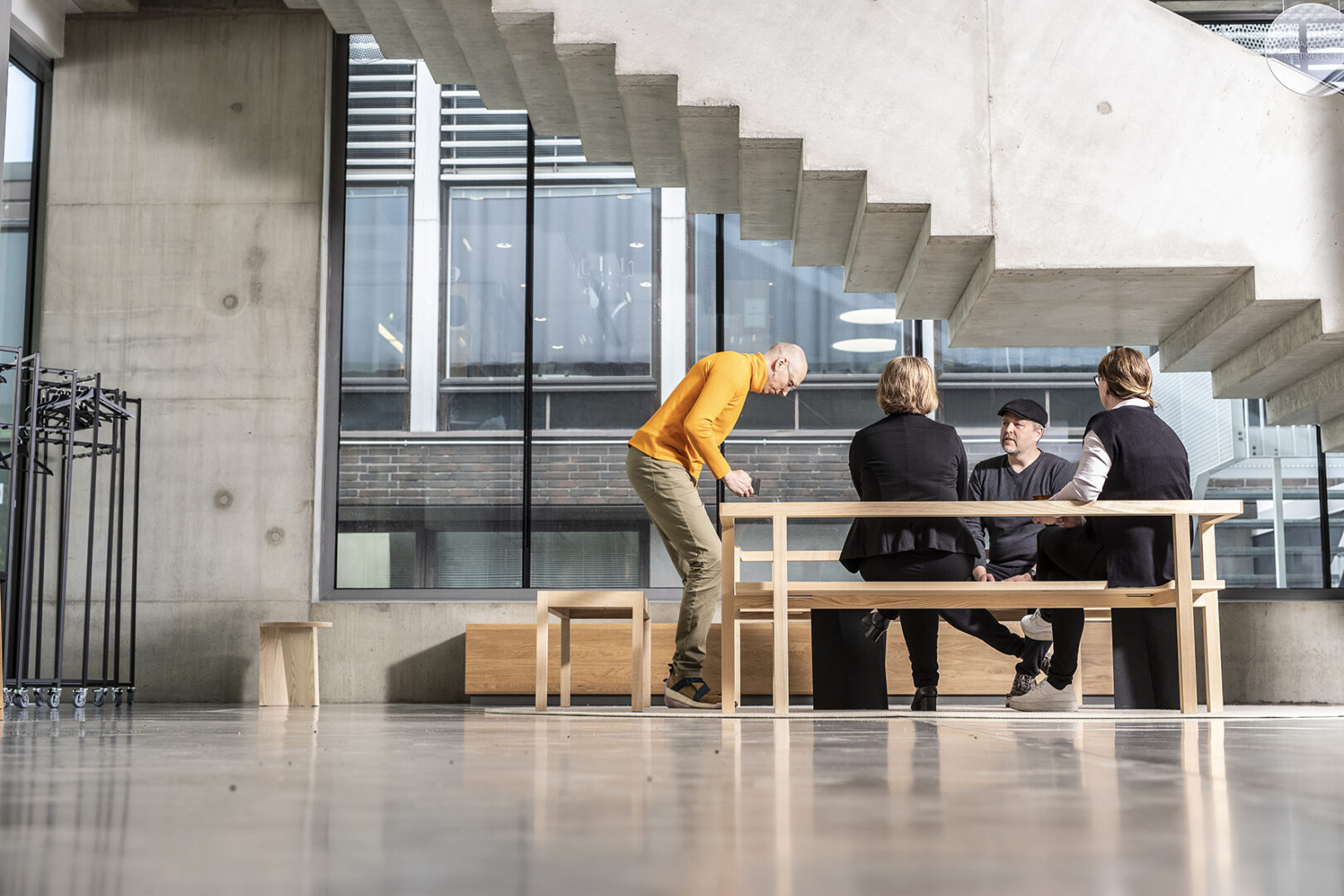
Annual carbon footprint calculation
The first carbon footprint calculation establishes the baseline for your organisation. From there, operations can be developed through continuous carbon footprint management, with the calculation repeated annually. Our specialists help gather the necessary source data and link it to lifecycle emission factors.
Climate impacts are assessed using the GHG Protocol – the most widely used global standard for carbon footprint calculation, built to meet future requirements. A materiality analysis is also recommended to identify the largest emission sources across the entire value chain (Scope 3 emissions). The CSRD directive (ESRS standard) for sustainability reporting, for example, requires the use of materiality analysis.
Results are presented on an interactive Power BI reporting platform, enabling emissions to be analysed by property, production facility or across the whole organisation.

Carbon roadmap
A carbon footprint calculation provides the foundation for a concrete carbon roadmap, guiding low-carbon business development systematically at a practical level. Target-setting is supported through materiality assessments and participatory workshops. Granlund’s AI Energy Survey tool helps convert energy savings into emission reductions.
The roadmap sets out the most impactful and cost-efficient emission reduction measures year by year. It is designed to be integrated into the organisation’s overall operations and strategy, enabling progress to be monitored, measured and managed. The roadmap is updated as needed.
Climate commitments
Climate commitments such as SBTi and the Net Zero Carbon Buildings commitment strengthen the credibility of carbon footprint calculations and other low-carbon measures. They also provide a reliable, internationally recognised framework for low-carbon management.
The Net Zero Carbon Buildings commitment encourages real estate and construction companies to achieve carbon-neutral energy use by 2030. Granlund is a signatory to the commitment.
The Science Based Targets initiative (SBTi) encourages organisations to set science-based climate targets. Granlund has set a 1.5-degree emission reduction target for its own operations.
Low-carbon consulting for construction projects
Low-carbon management supports new builds and refurbishment projects comprehensively. In addition to climate benefits, environmentally sound solutions can reduce lifecycle costs. The best outcomes are achieved when low carbon is set as a target before design work begins. Systematic low-carbon management throughout the entire construction project is essential.
Our low-carbon consultants support you at every stage of a construction project, from the selection of construction products through to design, site management and maintenance preparation. Emissions can be verified at the commissioning stage. Carbon footprint management often continues through the operational phase to the end of the property lifecycle.
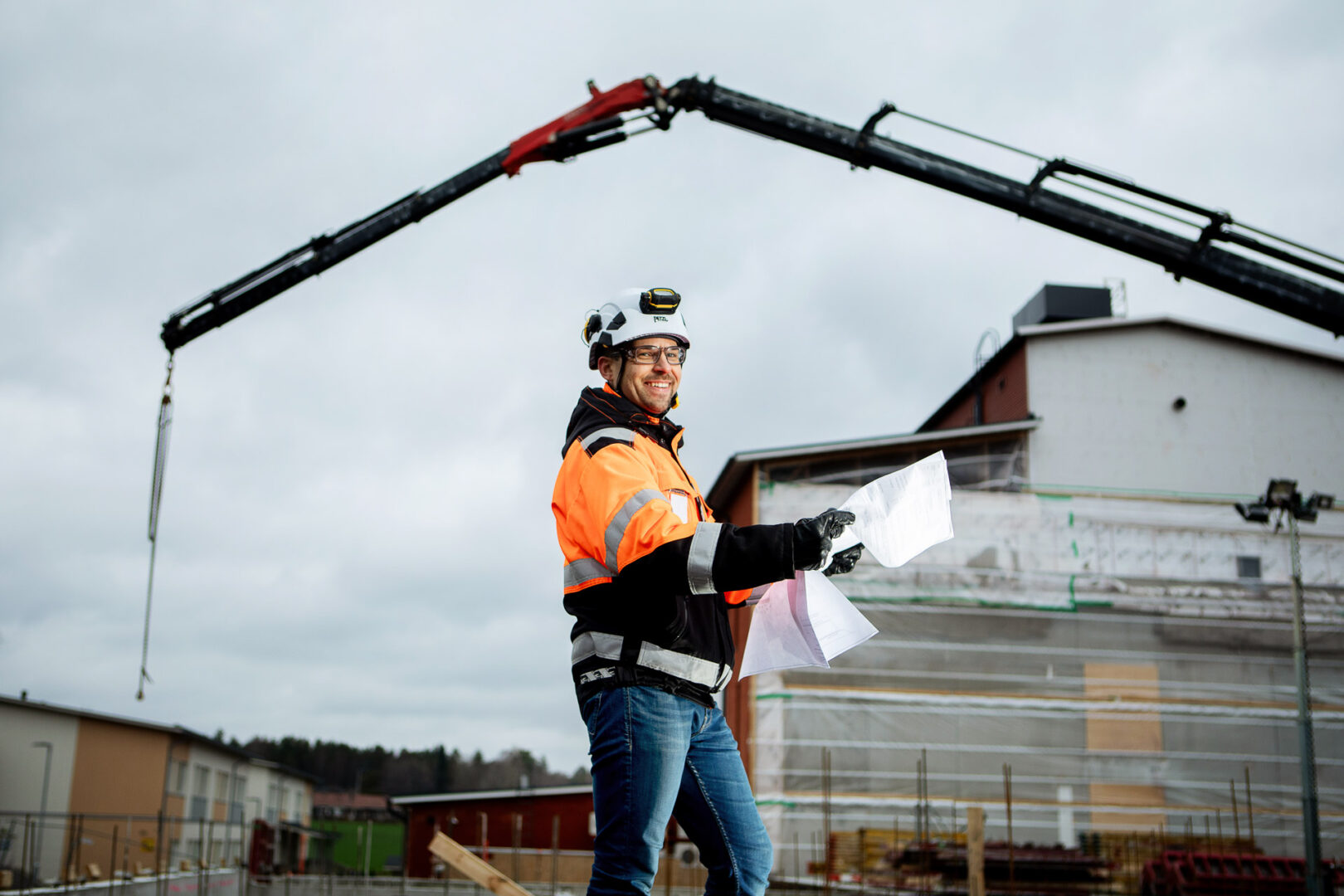
Carbon footprint calculation and climate assessment for construction projects
Our experienced low-carbon consultants carry out carbon footprint calculations for construction projects based on the EN 15978 standard, using the Finnish Ministry of the Environment assessment methodology – a method we have been involved in developing.
Standard-based carbon footprint calculation produces comparable data on the lifecycle carbon footprint of new builds and refurbishment projects, phase by phase.
Carbon footprint calculation is a key tool in low-carbon project management. It guides decisions on energy sources, structures and materials, advancing low-carbon construction practices. Calculations also address the requirements of environmental certification systems.
As the Finnish Construction Act is updated, carbon footprint calculations are required for certain building types. Projects must produce a climate assessment reporting the results of the carbon footprint calculation. For projects subject to carbon footprint limit value controls, systematic low-carbon management throughout the project becomes increasingly critical.
Low-carbon management for construction projects
Every construction project has its own characteristics and these are taken into account throughout the low-carbon management process. Low carbon needs to be integrated into design objectives early enough to make a meaningful difference. Data is produced to support decision-making at each project stage and all parties are guided through low-carbon measures step by step.
Low-carbon management produces reliable data covering the full project lifecycle, from structural and material choices that reduce the carbon footprint through to renewable energy solutions, low-emission site operations and transport and circular economy approaches to construction materials. Low-carbon concepts can also be developed and scaled across multiple sites.
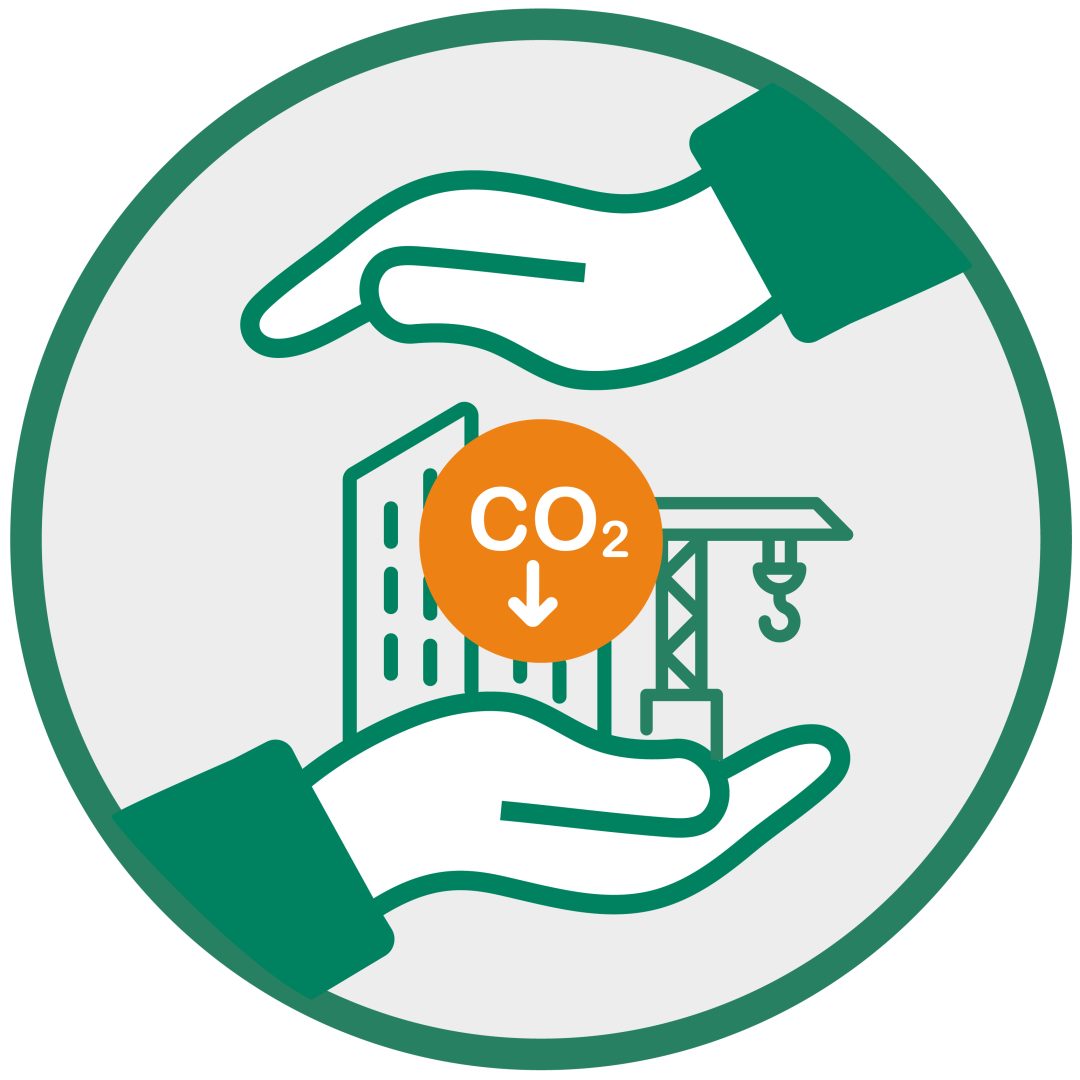
Carbon handprint
Alongside reducing the carbon footprint, it is important to increase the climate benefits of construction – the positive climate impacts known as the carbon handprint.
The carbon handprint refers to positive climate impacts that would not exist without the construction project. Construction products can, for example, be reused, reducing emissions from material production. Buildings can generate renewable energy beyond their own needs or serve as long-term carbon stores. Granlund also supports responsible emission offsetting as part of the journey towards carbon neutrality.
Carbon footprint management for construction products
The construction products industry benefits most from carbon footprint calculation when the organisation’s overall carbon footprint is calculated at the same time as product and product category EPD environmental declarations. This saves time, as both require the same source data. Our specialists ensure that EPDs and lifecycle assessments for construction products support the development of low-carbon business operations.

Read our latest sustainability stories

How can you measure the impacts of construction on biodiversity loss?
18.03.2025 – As much as a third of biodiversity loss is the result of construction. In our pilot project, we tested biodiversity…
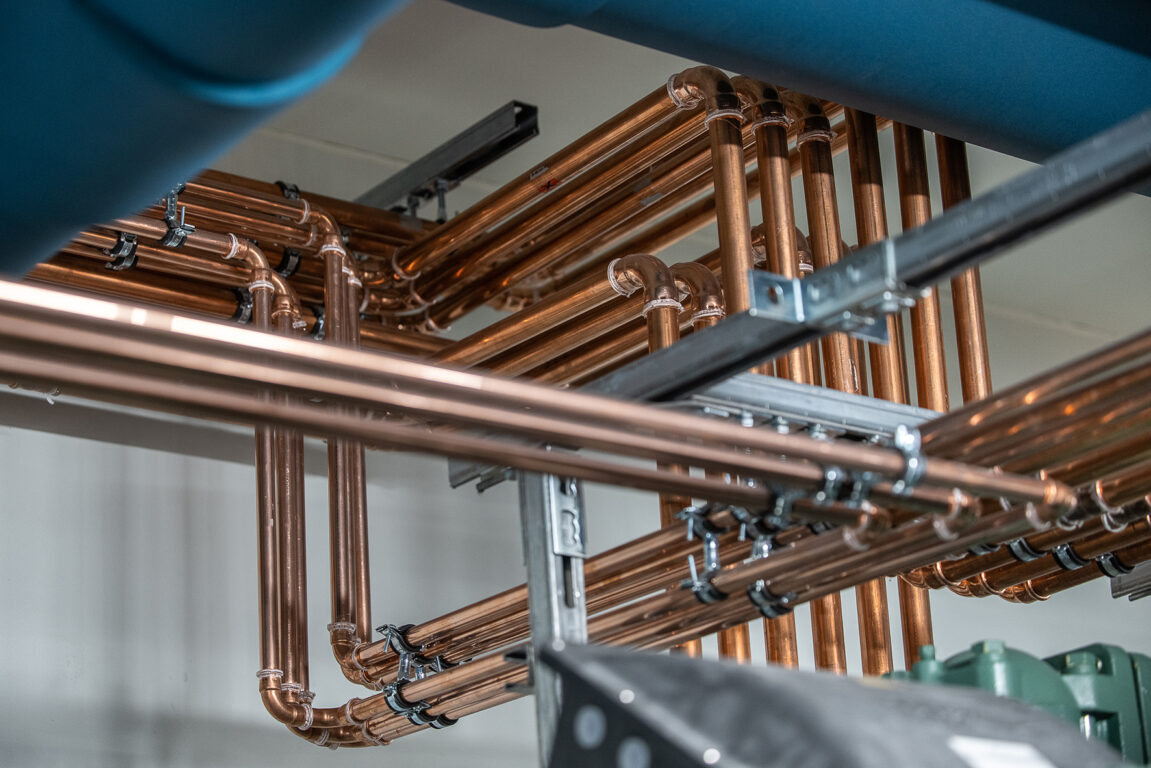
New project expedites circular economy in MEP
12.03.2025 – The project collects information and investigates ways in which circular economy can be achieved in practice. The prerequisites for the…

Technology can be the painkiller for your CSRD reporting headache
28.10.2024 – Sustainability professionals: don’t miss this prime opportunity! Use the reporting requirements as your mandate to build your sustainability dashboards and…

Smartvatten water data flows into Granlund Manager
12.04.2024 – The integration between Granlund Manager and Smartvatten makes water consumption monitoring and reporting significantly faster and more reliable. The tightening…

Employees are actively involved in developing Granlund’s diversity efforts
15.02.2024 – Granlund’s international employees are a valuable resource in developing the diversity of the work community and expanding expertise. Four Granlund…

Development of sustainable solutions expands from real estate to city blocks
06.02.2024 – At the moment, all development activities are focused around mitigating climate change. We must find new ways of reducing emissions.

How we calculate our carbon handprint
10.10.2023 – When we help our customers reduce their carbon footprint, we increase our carbon handprint. We calculate our carbon handprint using…
Should we calculate carbon handprint alongside carbon footprint?
30.03.2023 – Carbon handprint aims at capturing the positive climate impacts that a company produces to its’ clients or to the society…
EU taxonomy for sustainable activities should not be ignored
31.01.2023 – The EU classification system for sustainable funding, also known as EU taxonomy, impacts construction projects. The planning stages of a…
Meet us at BIM World MUNICH 2022
14.11.2022 – Granlund attends the BIM World MUNICH at Finnish pavilion.
Would you like to hear more? Let’s talk!